The best workplaces don't choose between collaboration and concentration. They make room for both. The challenge isn't open-plan design—it's giving people the right spaces for the way they actually work, from focused tasks to spontaneous conversations. The trouble starts when all that openness comes with nowhere to focus, nowhere to take a private call, and nowhere to escape the office soundtrack. The goal is not to kill the open office. It is to make it work better by giving people more choice, better focus, and a little breathing room without bringing in demolition crews. Research has linked open-plan offices with common issues such as noise, distraction, privacy concerns, and reduced satisfaction, so the smartest fix is not more walls everywhere.
With flexible desk dividers, suspended dividers, and modular acoustic solutions, func. helps teams create privacy where it is needed most, without building permanent walls or locking the office into one layout forever.
The Real Issue Is Not Openness. It Is No Escape
Open-plan offices only become a problem when every type of work is forced into the same space. Focused work, phone calls, collaboration and sensitive conversations all compete in a single exposed, noisy environment.
Privacy is not anti-collaboration. It gives people the choice to work in the right setting for the task. That is what stops collaboration from turning into office soup.
First, Know What Kind of Privacy You Actually Need
Before specifying a solution, work out what kind of privacy the office is missing.
Visual privacy reduces movement, exposed sightlines, and the feeling of being constantly watched. Desk dividers, privacy screens, planters, shelving, smart desk orientation, and suspended dividers can all help.
Acoustic privacy reduces sound distractions and improves speech privacy. Acoustic desk dividers, suspended acoustic dividers, acoustic panels, soft finishes, sound masking, and phone booths can all play a role.
Functional privacy gives people the right setting for the task, whether that is a quiet area for focused work, a semi-private spot for calls, or a meeting room for sensitive information.
Start with Desk Dividers: The Budget-Friendly Privacy Hero
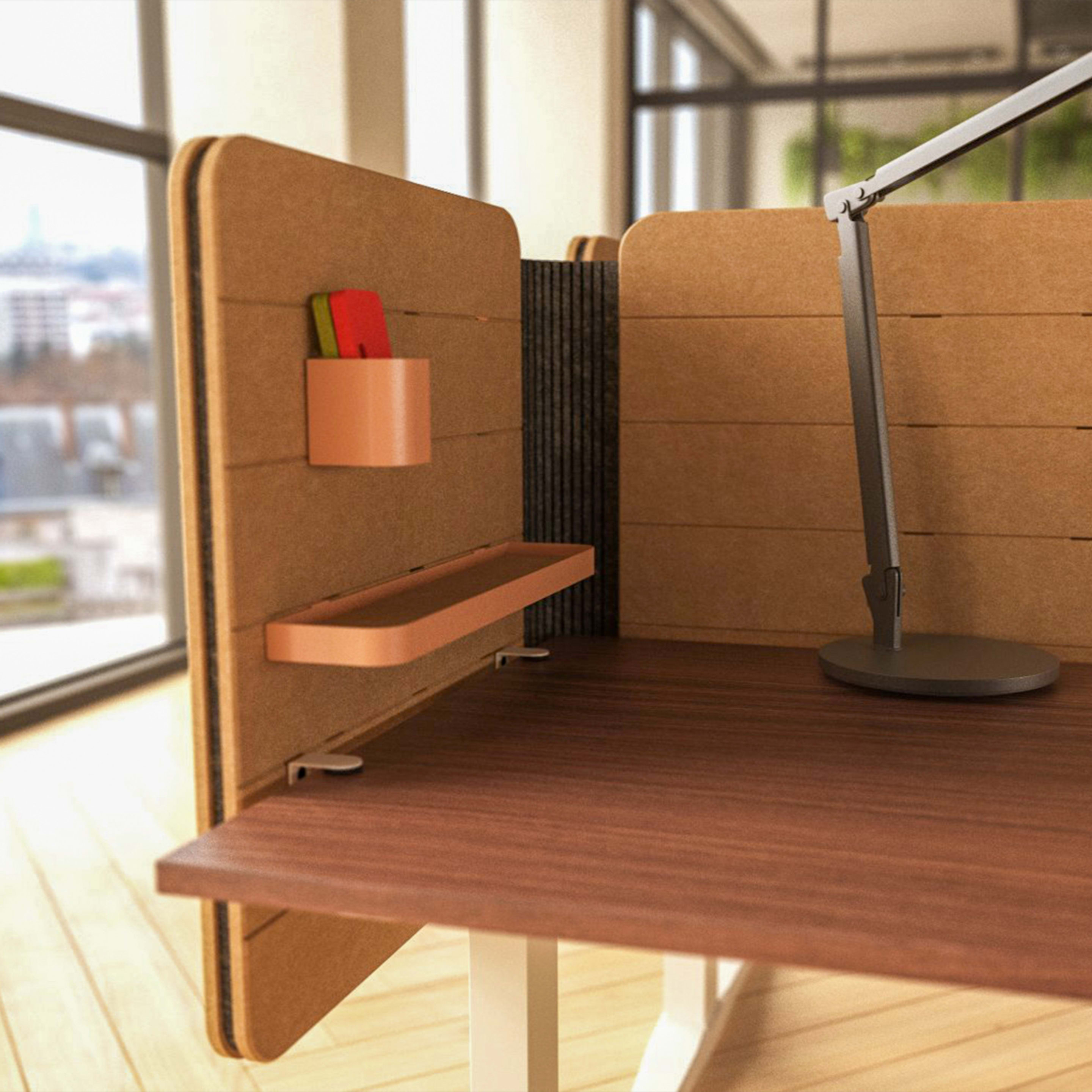
If you want to know how to create privacy in an open plan office without starting a full rebuild, desk dividers are one of the smartest places to begin.
Compared with permanent walls, private offices, or a fleet of enclosed pods, desk dividers are a cost effective first layer. They can be added to existing workstations, rolled out in stages, and targeted to the teams that need them most. No construction circus. No massive downtime. No mysterious dust in the coffee machine.
Desk dividers make sense when teams need to:
Reduce visual distractions between workstations
Create a clearer sense of personal space
Add privacy without changing the whole floor plan
Improve focus in high-traffic or high-noise areas
Phase privacy upgrades in gradually to protect the budget
Desk dividers also deliver quick wins for employee satisfaction. They help reduce direct sightlines, soften nearby distractions, and create a clearer sense of personal workspace. Acoustic desk dividers can add another layer of comfort by helping absorb sound around busy workstations.
The big advantage is flexibility. As teams grow, shrink, or shift their work styles, dividers can move with them. func.’s workstation dividers and desk partitions help businesses add privacy where it matters without trapping the office in one permanent layout.
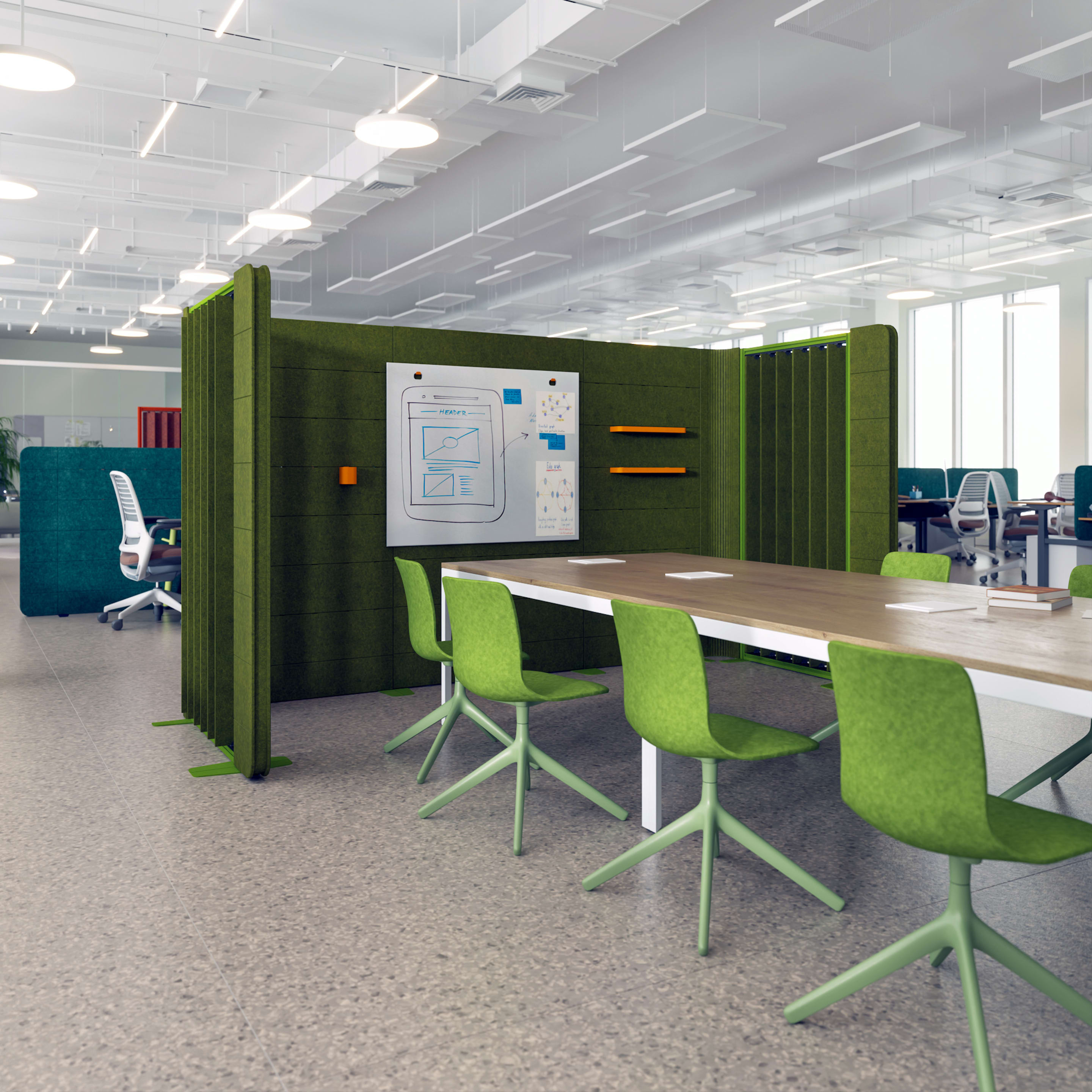
Use Suspended Dividers to Create Zones Without Building Walls
Suspended dividers are a smart way to create more intentional spaces without closing the office off completely. They help define focus zones, collaboration areas, walkways, and phone-heavy spaces while keeping the workplace light, modern, and adaptable.
They are especially useful where floor space is limited or where teams need separation without bulky furniture. Used well, suspended office dividers can reduce visual distractions, support sound absorption, and turn an undefined open space into a more purposeful workplace.
For example, func’s DAV Aesthetics project, where a Bunji Rotating Screen helped improve waiting room privacy without making the space feel boxed in. The same idea appears in the Southern Change Behavioral Health Services project, where Bunji Rotating Acoustic Screens were used to create more privacy in a healthcare office while keeping the layout flexible.


Build Privacy in Layers, Not Panic Purchases
No single product fixes every open office problem. The best open office privacy solutions usually combine layout, dividers, acoustic materials, and task-based spaces.
Privacy Need | Flexible Divider Solution | When to Add Complementary Solutions |
|---|---|---|
Visual Distractions between desks | Desk dividers create personal focus and reduce sightlines | Add taller partitions only where teams need more enclosure |
Undefined work zones | Suspended dividers and mobile walls help shape focus, collaboration, and circulation zones | Add freestanding walls or pods for areas requiring more separation |
Nearby conversations | Acoustic desk dividers help soften workstation noise | Add acoustic panels or sound masking where broader sound control is needed |
Noisy collaboration areas | Suspended acoustic dividers help absorb sound and define the zone | Add ceiling baffles or enclosed spaces for high-noise areas |
Confidential calls | Dividers and Pods can support nearby visual privacy and zoning | Add phone or meeting booths where speech privacy is essential |
Changing team layouts | Movable desk and suspended dividers, and mobile walls, support flexible reconfiguration | Add modular systems where larger-scale zoning is needed |
This layered approach helps protect the budget. Instead of buying phone booths for everyone, start with flexible, lower-cost fixes across the wider office, then reserve higher-investment solutions for the places where privacy really needs to work harder.
When Bigger Privacy Investments Make Sense
Phone booths, focus pods, and semi-enclosed rooms still have their place. They are especially useful for frequent confidential calls, hybrid video meetings, HR conversations, finance discussions, or client-facing teams handling sensitive information.
They are worth considering when:
Teams regularly handle sensitive information
Hybrid meetings are creating constant noise
There are not enough meeting rooms or quiet areas
Noise complaints continue after divider and zoning upgrades
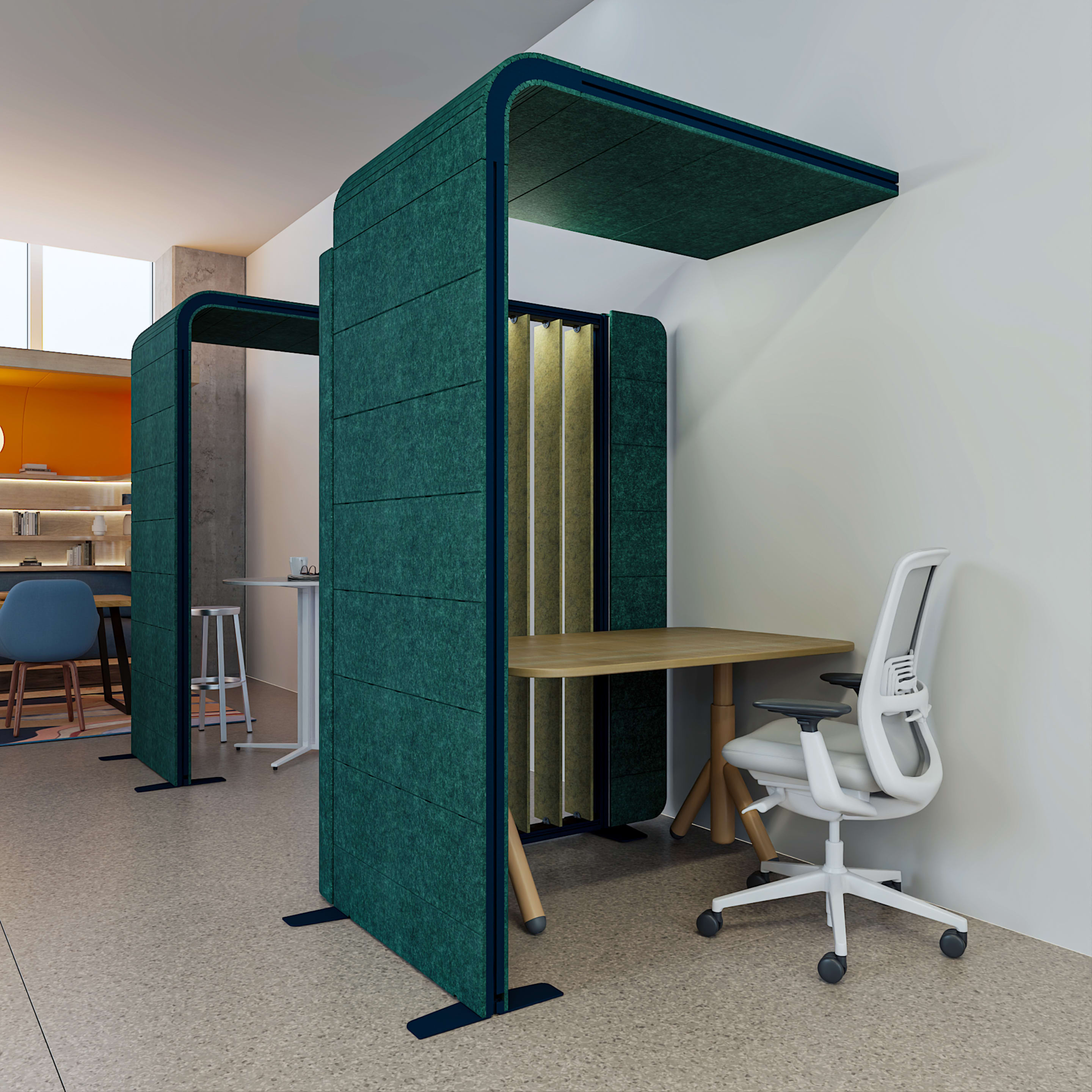
The trick is not to treat booths or pods as the only answer. In many modern workplace settings, desk dividers can solve everyday privacy problems at the workstation level, while mobile walls add flexible separation for calls, quick meetings, or changing team needs. Booths and pods still have their place for moments that need stronger acoustic separation, but they do not have to carry the whole privacy strategy.
Privacy Also Supports Inclusion
Privacy is not just about productivity. It also supports different work styles, sensory needs, and employee wellbeing.
Some people are more affected by movement, background chatter, or the feeling of being constantly visible in open environments. Quiet areas, desk dividers, suspended dividers, and retreat spaces can help reduce sensory overload while still keeping the office open and connected.
The Smarter Way to Rethink an Open Office
Creating privacy in open plan offices does not mean building more walls or blowing the budget on a total redesign. Start with the biggest pain point, separate visual privacy from acoustic privacy, and use flexible solutions that can grow with the team.
Need more privacy without building more walls? func.’s desk dividers, mobile walls and suspended dividers help teams create focused, flexible zones without blowing the budget or trapping your office in one layout forever.